






Current Issues
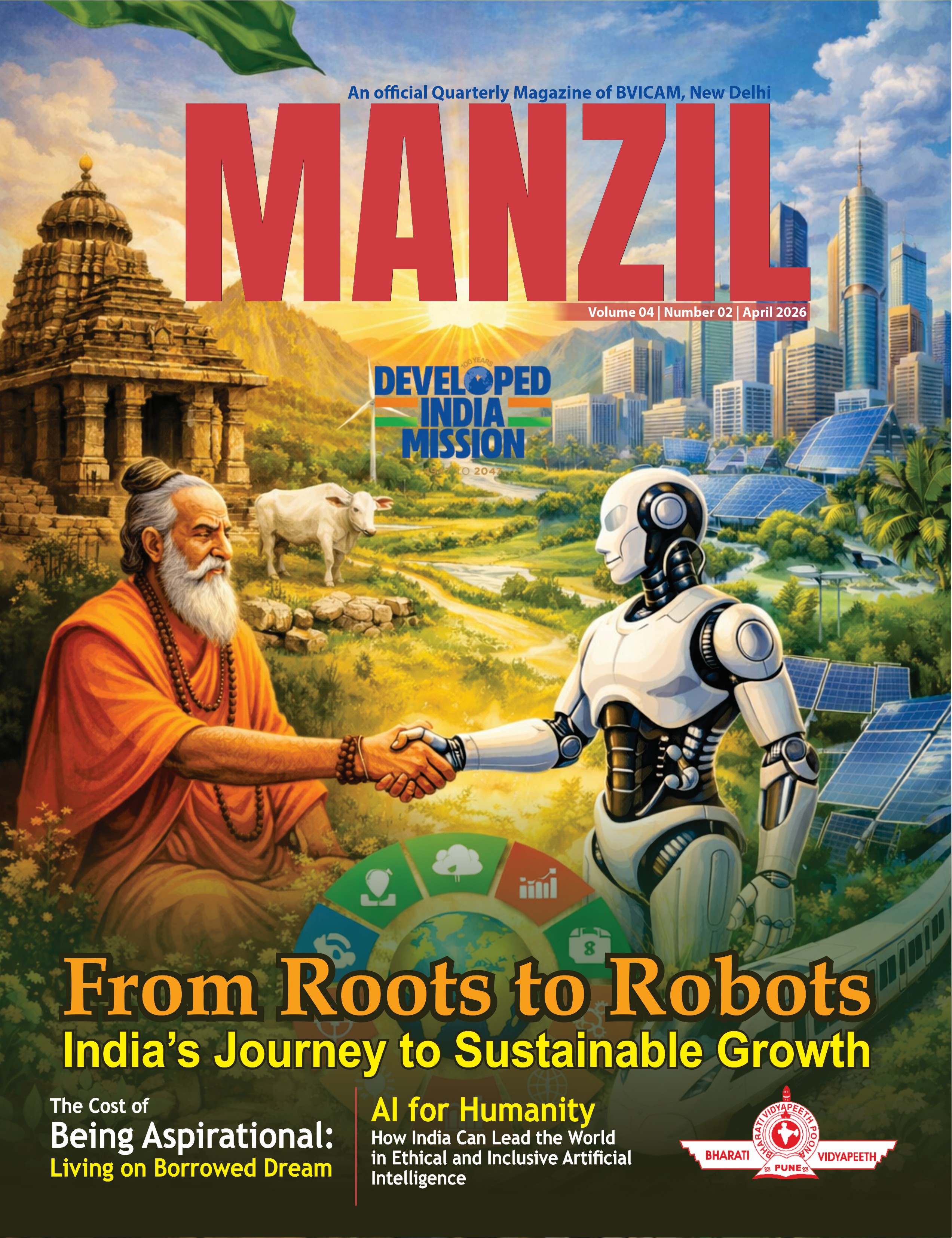
MANZIL Volume 04 | Number 02 | April 2026
The latest issue of Manzil – The Official Quarterly Magazine of BVICAM, New Delhi (Volume 4, Number 02) presents a rich and diverse collection of articles that reflect the multifaceted dimensions of contemporary thought. This edition successfully brings together themes of Artificial Intelligence, technology, sustainable development, Indian Knowledge Systems (IKS), and human emotions, offering readers a holistic perspective on the evolving world. A key highlight of this issue is its strong emphasis on Artificial Intelligence and technology. The articles explore how AI is transforming industries, education, and everyday life, while also raising important questions about ethics, responsibility, and the future of human-machine interaction. The discussion goes beyond technical aspects, encouraging readers to consider the broader societal impact of rapid technological advancement. The inclusion of Indian Knowledge Systems (IKS) adds depth and cultural richness to the issue. By revisiting traditional wisdom and its modern relevance, the magazine highlights how ancient knowledge can complement contemporary science and technology. This integration of heritage with innovation reflects a uniquely Indian approach to progress. What sets this issue apart is its attention to the emotional and human dimension. Articles exploring emotions, mental well-being, and interpersonal connections remind readers that development is not solely technological or economic, but also deeply personal and psychological. In an age driven by digital interactions, this focus on emotional intelligence is both timely and necessary. Overall, this issue of Manzil stands as a testament to intellectual diversity and balanced discourse. It successfully bridges the gap between tradition and modernity, logic and emotion, innovation and sustainability. By addressing such a wide spectrum of themes, the magazine not only informs but also inspires readers to think critically and act responsibly. In essence, Volume 4, Number 02 of Manzil captures the spirit of a generation striving toward progress while staying rooted in values—an essential step toward building a truly inclusive and sustainable future.
Read More
Incorporating Indian Knowledge Systems (IKS) and Their Global Relevance
Prof. Sheel Nidhi Tripathi BVICAM, New Delhi Indian Knowledge Systems (IKS) represent a vast and profound body of wisdom developed over thousands of years, encompassing disciplines such as philosophy, science, mathematics, medicine, environmental sustainability, and governance. Rooted in ancient texts and practices, IKS offers holistic approaches to life that integrate intellectual, spiritual, and practical dimensions. In today's rapidly changing world, incorporating IKS into modern systems has gained renewed importance, not only for India but for the global community. One of the key strengths of IKS lies in its emphasis on balance and harmony. Traditional practices such as Ayurveda promote preventive healthcare and holistic well-being, focusing on the interconnectedness of mind, body, and environment. Similarly, ancient Indian approaches to agriculture, including organic farming and water conservation techniques, provide sustainable solutions to contemporary environmental challenges. As the world grapples with climate change and resource depletion, these time-tested practices offer valuable insights for sustainable development. IKS has also made significant contributions to global knowledge in fields like mathematics and astronomy. Concepts such as zero, the decimal system, and early astronomical calculations originated in India and continue to influence modern science. Incorporating such historical contributions into education systems worldwide can enrich understanding and foster appreciation for diverse intellectual traditions. In the modern era, integrating IKS with contemporary technology and research can lead to innovative solutions. For instance, combining traditional medicinal knowledge with modern scientific methods can enhance drug discovery and healthcare outcomes. Similarly, blending ancient architectural principles with modern engineering can result in eco-friendly and climate-resilient infrastructure. Beyond practical applications, IKS also carries deep philosophical and ethical values. Ideas such as “Vasudhaiva Kutumbakam” (the world is one family) promote global unity, compassion, and cooperation—values that are essential in an increasingly interconnected yet divided world. These principles can guide international relations, conflict resolution, and collective efforts toward global peace. However, incorporating IKS globally requires careful validation, documentation, and adaptation to contemporary contexts. It is important to ensure that traditional knowledge is scientifically evaluated while preserving its authenticity. Collaboration between scholars, scientists, and policymakers is essential to achieve this balance. In conclusion, Indian Knowledge Systems offer a rich repository of wisdom that holds immense value for the world. By thoughtfully integrating these ancient insights with modern advancements, humanity can move toward a more sustainable, ethical, and harmonious future.
Read More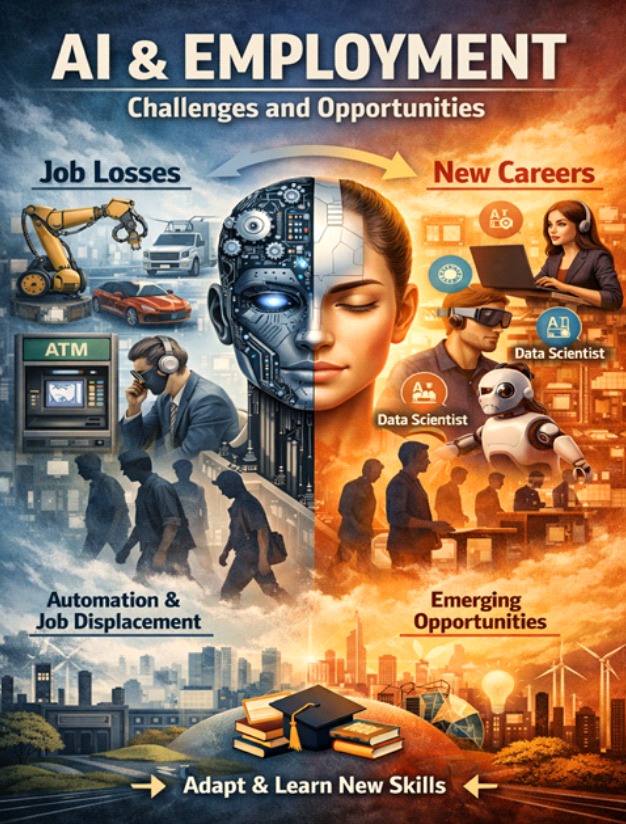
The Impact of Artificial Intelligence (AI) on Employment
Md. Nazare Alam MCA 1st year, BVICAM, New Delhi Artificial Intelligence (AI) is currently one of the most rapidly evolving technologies. It is bringing about significant changes across various sectors of society and the economy. For instance, the application of AI is steadily increasing in fields such as industry, education, healthcare, media, banking, and administration. Consequently, the employment landscape is also being profoundly and rapidly impacted by this technological transformation. On one hand, AI is altering or diminishing certain traditional jobs; on the other, it is simultaneously generating new employment opportunities. Therefore, much like any other invention, it can be said that AI presents both a challenge and an opportunity for employment. To begin with, if we consider the negative aspects, many people believe—or harbor fears—that AI could lead to a reduction in certain traditional jobs. Machines and automated systems are now capable of performing numerous tasks that were previously executed by humans. For example, robotic machinery in factories can achieve production levels with greater speed and precision than human workers. Similarly, the deployment of AI is on the rise in sectors such as banking, customer service, data entry, and transportation. As a result, low-skilled jobs may gradually diminish, potentially creating employment challenges for certain segments of the workforce. However, viewing the other side of the coin, this actually constitutes an advantage, as it will lead to enhanced work quality and foster a culture of "smart work." Thus, AI is not merely eliminating jobs; it is also giving rise to entirely new types of work. With the advancement of AI, the demand for professionals in fields such as data science, machine learning, robotics, cybersecurity, and AI programming is surging. Companies are actively seeking individuals capable of designing, managing, and optimizing AI systems. Furthermore, new opportunities are emerging in sectors such as digital media, content creation, and technical management. This enables users to leverage AI to create music tailored to their specific preferences and to conduct novel experiments. However, this also remains a subject of concern, as it carries the potential for ethical transgressions. In this era of AI, the most critical imperative is the development of new skills. Those who are willing to learn new technologies and update their skill sets stand to discover a multitude of new employment opportunities. Therefore, the government, educational institutions, and society at large must collaborate to encourage the youth to acquire technical and digital competencies. If provided with the right training and education, the employment landscape—currently undergoing transformation due to AI—can be converted into a source of positive opportunity. Individuals could potentially earn more than they do today and achieve greater economic prosperity. With all these factors in mind, it can be asserted that Artificial Intelligence is reshaping the world of employment on a massive scale. While it may lead to a decline in certain traditional jobs, it simultaneously opens doors to new avenues of opportunity. It is essential that society and policymakers recognize the nature of this transition and prepare people to acquire the necessary new skills. If utilized responsibly and judiciously, AI can serve as a powerful catalyst for progress and growth within the employment sector—and indeed, it is already doing so. All that is required is the right approach to learning and application; if we succeed in this, AI will prove to be a boon for our society and the world; otherwise, it risks becoming a curse. The ultimate decision regarding how we choose to embrace this phenomenon rests entirely with us.
Read More
The Great Augmentation: Navigating the Impact of AI in a Growing World
Dr. Neha Sharma Assistant Professor, BVICAM, New Delhi The year 2026 marks a definitive era in human history, often referred to by economists as "The Great Augmentation." Artificial Intelligence (AI) is no longer a futuristic novelty or a background algorithm; it has become the central nervous system of the global economy and the invisible architect of modern society. From the hyper-personalized classrooms of New Delhi to the autonomous logistics hubs of the American Midwest, AI is fundamentally reshaping how 8 billion people live, work, and interact. The Economic Engine: From Experimentation to Essential Infrastructure By early 2026, the global economic narrative has shifted from AI "potential" to measurable AI "productivity." Research indicates that AI infrastructure spending now accounts for a significant portion of GDP growth in major economies. In the United States, nearly 1% of total economic growth is attributed directly to data centers, chips, and power grid upgrades required to sustain large-scale inference models. We are witnessing a shift from Generative AI—which focused on creating content—to Agentic AI, where autonomous systems execute complex, multi-step workflows. In the corporate world, this has led to "AI-native" operating models. Instead of humans using AI as a tool, businesses are being redesigned around AI cores. This transition is expected to deliver an additional $13 trillion in global economic activity by the end of the decade. The Labor Market: A New Hierarchy of Skills The impact of AI on the workforce is perhaps the most visible and debated aspect of this transformation. In 2026, the job market has bifurcated into a clear "M-shaped" economy. At one end, there is a massive surge in demand for AI-literate professionals; in fact, candidates with AI-related skills now command a wage premium of up to 23% over their peers. At the other end, entry-level "stepping-stone" jobs in fields like data entry, basic accounting, and routine customer service are rapidly being automated. The Exposure Paradox Interestingly, high-earning white-collar roles are often the most "exposed" to AI. Tasks in legal research, financial analysis, and software programming can now be handled by models with over 90% theoretical efficiency. However, the physical world remains a sanctuary for human labor. Roles in construction, healthcare, and specialized trades are currently more insulated, as the cost of robotic hardware has not yet fallen as fast as the cost of software intelligence. Healthcare: The Era of Predictive Medicine In 2026, healthcare has moved from reactive diagnosis to proactive intervention. AI is now embedded in hospital infrastructure, managing everything from patient flow to real-time surgical guidance. Early Detection: AI-enabled medical imaging is now 87% more effective at reducing patient admission delays by triaging cases before a human doctor even enters the room. Biotechnology: The drug discovery process, which once took a decade, has been shortened by years. AI models now predict molecular interactions with such precision that the global AI-biotechnology market is projected to reach $26 billion shortly. Nursing Support: To combat global nursing shortages, "ambient listening" tools now handle the burden of documentation, allowing medical staff to focus entirely on patient care rather than paperwork. Education and the "Personalization" Revolution The traditional "one-size-fits-all" education model is collapsing. In its place, AI-driven adaptive learning platforms provide a bespoke curriculum for every student. These systems adjust the difficulty, pace, and style of teaching in real-time based on the learner's emotional and cognitive responses. However, this brings a new challenge: The Digital Divide. While students in tech-forward regions benefit from AI tutors, millions in developing nations struggle with basic digital access. This "readiness gap" threatens to create a new form of global inequality, where the ability to collaborate with AI becomes the primary determinant of a person's future prosperity. The Ethical Frontier: Trust, Bias, and Sovereignty As AI moves into autonomous decision-making, the ethical stakes have reached a fever pitch. In 2026, "Ethics by Design" has moved from a corporate slogan to a regulatory requirement. The Trust Paradox While 65% of leaders report that their employees trust AI data, over 70% admit their workforce lacks the skills to use that data responsibly. This "trust paradox" is the primary driver of new governance frameworks, such as the India AI Readiness Assessment and the EU AI Act updates, which prioritize transparency and data sovereignty. Furthermore, the environmental cost of AI is now a central political issue. The immense computational power required to train the next generation of models has a significant carbon footprint, leading to a push for "Sustainable AI" and decentralized "edge computing" that processes data locally to save energy. The impact of AI in 2026 is a study in contrasts. It offers the promise of near-infinite productivity and breakthroughs in human health, yet it threatens to hollowing out the middle class and erode the boundaries of privacy. The world is not just growing; it is being re-coded. Success in this new era will not be defined by who has the most powerful algorithms, but by how thoughtfully societies integrate those algorithms into the fabric of human values. As we navigate "The Great Augmentation," the most valuable skill a human can possess is no longer just "knowing" the answer, but knowing which questions to ask.
Read More
Healing with Algorithms: How Artificial Intelligence is Redefining Health Communication in India
Dr. Yasir Arfat Health Communication Expert For millions of Indians, healthcare is not just about treatment—it is about access to the right information at the right time. Miscommunication, lack of awareness, and delayed information often stand between patients and timely care. In this context, Artificial Intelligence (AI) is not only transforming diagnosis and treatment but also reshaping health communication—the way information is created, delivered, and understood. From AI-powered chatbots answering patient queries to personalised health messages delivered via mobile phones, the intersection of AI and health communication is quietly placing patients at the centre of healthcare. In a country marked by linguistic diversity and uneven healthcare access, this shift carries both immense promise and complex challenges. Bridging Information Gaps: AI as a Health Communicator One of the most persistent challenges in Indian healthcare is the gap between medical knowledge and patient understanding. Complex medical terminology, limited doctor-patient interaction time, and low health literacy often result in confusion and delayed action. AI is helping bridge this gap by simplifying and personalising communication. Virtual assistants and chatbots can translate medical information into easy, conversational language, enabling patients to better understand their symptoms, diagnoses, and treatment plans. These tools are increasingly being used to provide 24/7 support—something that traditional healthcare systems struggle to offer. For instance, AI-driven platforms can guide patients in managing chronic conditions such as diabetes by sending reminders for medication, diet, and regular check-ups. This continuous flow of information strengthens patient engagement and encourages adherence to treatment. In a multilingual country like India, AI also enables communication in regional languages, making healthcare information more inclusive. Patients who might otherwise hesitate to seek medical advice due to language barriers can now access guidance in a familiar linguistic and cultural context. Personalised Messaging and Preventive Awareness Health communication is most effective when it is relevant to the individual. AI makes this possible by analysing patient data—age, lifestyle, medical history—and delivering targeted health messages. This has significant implications for preventive healthcare. AI systems can identify individuals at risk of conditions such as cardiovascular disease and send personalised alerts encouraging lifestyle changes or medical consultations. Instead of generic public health campaigns, communication becomes tailored, timely, and actionable. During the COVID-19 pandemic, AI-driven communication tools played a crucial role in disseminating information, tracking symptoms, and countering misinformation. Chatbots and automated messaging systems helped millions of users access verified health information instantly—demonstrating how technology can strengthen public health communication at scale. In India, government-led initiatives under the National Health Authority have begun integrating digital health records and communication platforms, laying the groundwork for AI-driven outreach. This allows healthcare providers to maintain continuous communication with patients, even outside clinical settings. Trust, Misinformation and Ethical Challenges While AI enhances the reach and efficiency of health communication, it also introduces new risks. The same tools that disseminate accurate information can, if poorly regulated, amplify misinformation. A growing number of patients rely on AI tools for health advice, sometimes without consulting medical professionals. This raises concerns about over-reliance and misinterpretation of automated responses. Health communication is not just about delivering information—it is about ensuring that information is accurate, contextual, and responsibly used. Data privacy is another critical issue. AI systems depend on sensitive patient data to personalise communication, making security and consent essential. Organisations such as the World Health Organization have emphasised the need for ethical frameworks to govern digital health communication. Moreover, trust remains central to effective communication. While AI can simulate conversation, it cannot replace the empathy and reassurance provided by human interaction. For many patients, especially in vulnerable situations, the presence of a doctor or healthcare worker is irreplaceable. Towards a Patient-Centred Communication Ecosystem India's healthcare transformation is as much about communication as it is about technology. AI offers an opportunity to move from episodic, hospital-based interactions to continuous, patient-centred engagement. By integrating AI into health communication strategies, India can address long-standing challenges—low health literacy, misinformation, and limited access to reliable information. However, this requires careful implementation. Digital tools must complement, not replace, human communication, ensuring that empathy and trust remain at the core of healthcare. The future of healthcare in India will depend not just on smarter diagnostics or advanced treatments, but on how effectively information flows between systems, providers, and patients. AI, when used responsibly, can make that flow faster, clearer, and more inclusive. In the end, the success of AI in healthcare will not be measured solely by technological advancement, but by its ability to inform, empower, and connect patients—turning communication into care.
Read More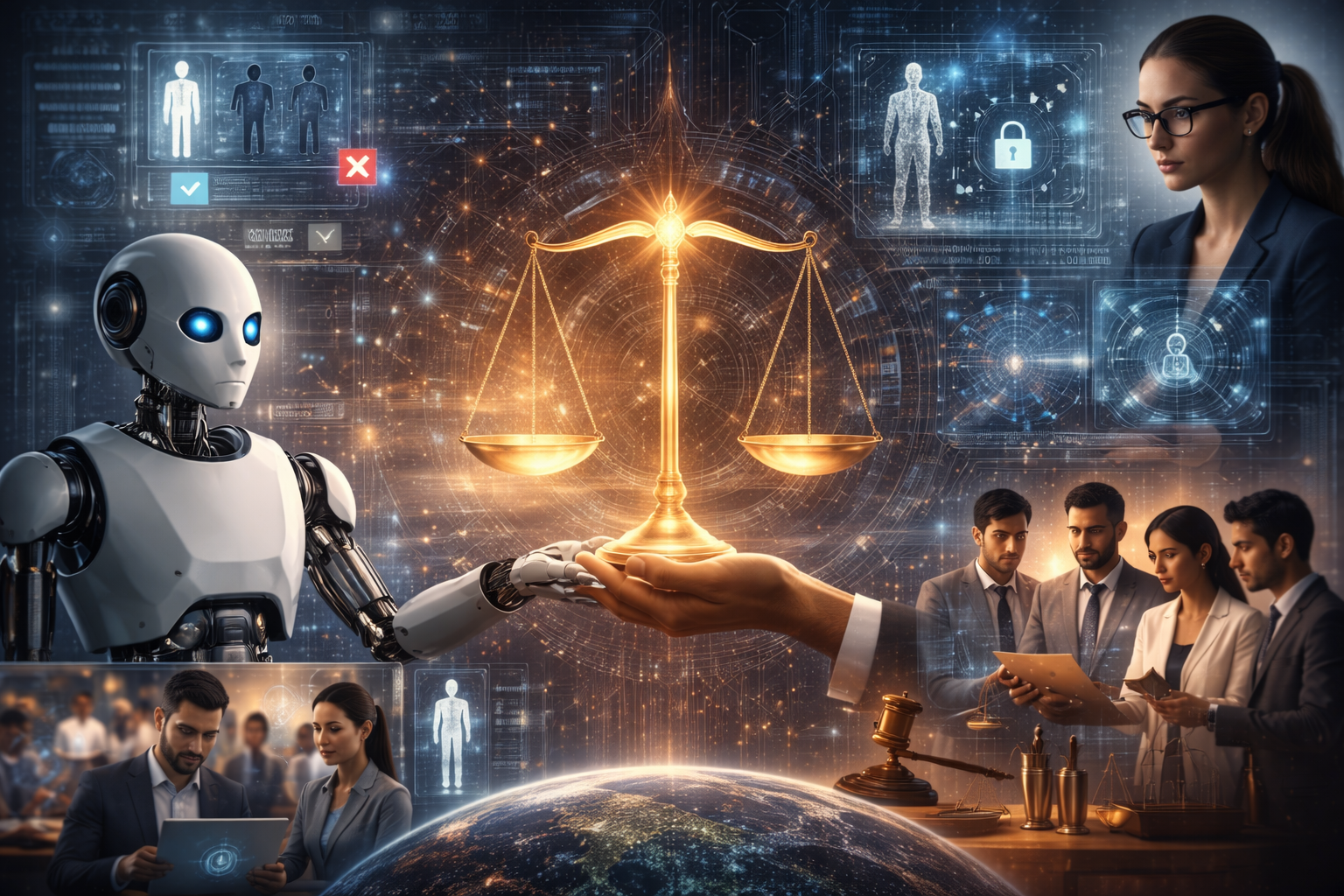
AI for Humanity: How India Can Lead the World in Ethical and Inclusive Artificial Intelligence
Pari Sharma BA JMC 1st year, BVICAM, New Delhi Artificial Intelligence (AI) is no longer just a futuristic concept discussed in science fiction. Today, it is already part of our everyday lives. From voice assistants on smartphones to recommendation systems on social media, AI is shaping the way people learn, work, and communicate. However, while AI brings innovation and efficiency, it also raises important questions about ethics, employment, and equality in society. Recent discussions at the India AI Impact Summit 2026 held in New Delhi focused on how countries can develop Artificial Intelligence responsibly. Leaders, researchers, and policymakers explored ways to ensure that AI technologies are designed not only for economic growth but also for the welfare of society. The central idea was clear: technology should serve people, not replace or harm them. One major challenge related to AI is ethical responsibility. AI systems depend on huge amounts of data to learn patterns and make decisions. If the data contains bias or incomplete information, the AI system may produce unfair results. For example, biased algorithms in recruitment or lending systems could disadvantage certain communities. Because of this, experts emphasize the need for transparency, accountability, and fairness in the development of AI systems. Another concern is the future of jobs. Many people worry that automation and intelligent machines may replace human workers in several industries. This concern is understandable. However, technological change has always created new opportunities along with challenges. AI is already opening new career paths in areas like data science, robotics, AI ethics, and digital innovation. What society needs now is better education and training so that young people can adapt to this changing technological environment. As a media student at **Bharati Vidyapeeth's Institute of Computer Applications and Management, I feel that our generation will directly experience the impact of Artificial Intelligence in both education and careers. Students today are not only users of technology but also future creators and decision-makers. This makes it important for us to understand both the benefits and the responsibilities that come with AI. AI also has the potential to support sustainable development. In countries like India, where agriculture supports a large portion of the population, AI tools can help farmers make better decisions. For instance, AI-based systems can analyze weather patterns, soil conditions, and crop health to predict possible risks. This information can help farmers plan irrigation, reduce crop loss, and improve productivity. At the same time, digital inclusion remains an important challenge. Advanced technologies often reach urban areas first, while rural communities may have limited access to digital infrastructure. If AI development focuses only on big corporations or technologically advanced regions, it may increase the existing digital divide. Therefore, governments and institutions must ensure that AI technologies remain accessible, affordable, and beneficial for all sections of society. India has a unique opportunity to shape the global future of responsible AI. With its large population, strong digital infrastructure, and growing technology sector, the country can develop solutions that address real social challenges. By focusing on ethical innovation, inclusive development, and sustainability, India can contribute to building an AI ecosystem that benefits both the nation and the world. In conclusion, Artificial Intelligence is not simply a technological advancement; it represents a major transformation in society. The real challenge is not whether AI should exist, but how it should be developed and used responsibly. If guided by strong ethical values and inclusive policies, AI can become a powerful tool to improve lives, strengthen communities, and create a better future for people and the planet.
Read More
Silenced by Respect: When Obedience Costs a Generation Its Voice
Vaibhav Arora BA JMC 3rd year, BVICAM, New Delhi Silence, long regarded as a sign of respect in many traditional societies, has shaped generations of young people to listen more than they speak and to comply rather than question. While this cultural norm aims to preserve harmony and hierarchy, it often comes at a hidden cost. Beneath the surface of obedience lies a growing struggle among youth to express their thoughts, emotions, and identities. As societies evolve and challenges facing younger generations become more complex, the expectation of silence is increasingly being questioned—not as a rejection of tradition, but as a call to balance respect with the fundamental human need to be heard. The Tradition of Silence In many conservative societies, silence is upheld as a symbol of respect. Younger members of families are expected to listen quietly, accept decisions without question, and suppress their opinions especially when they differ from those of elders. While this practice is deeply rooted in cultural traditions, its psychological cost on young people and its long-term impact on society are increasingly alarming. Conditioning Obedience From an early age, children are taught that disagreement equals disrespect. Whether the issue is education, career choices, mental health, gender roles, or personal freedom, the message remains the same: elders speak, the young comply. Over time, this enforced silence does not merely shape behavior it shapes identity. Young individuals begin to doubt their thoughts, emotions, and worth, internalizing the belief that their voices do not matter. The Psychological Toll Global data paints a troubling picture. According to the World Health Organization (WHO), one in seven adolescents aged 10–19 experiences a mental disorder, accounting for 15% of the global burden of disease in this age group. Depression, anxiety, and behavioral disorders are among the leading causes of illness and disability worldwide. Even more concerning, suicide is the third leading cause of death among people aged 15–29. Experts emphasize that protective and supportive environments at home, in schools, and within communities are critical to safeguarding young people's mental well-being. Yet, for many adolescents in rigid households, the home meant to be a place of safety becomes a space of emotional restraint. When feelings are dismissed as “immaturity” and opinions as “arrogance,” young people learn to bottle up distress. Research by James J. Gross and Oliver P. John (2003) shows that individuals who habitually suppress emotional expression report lower well-being, life satisfaction, and self-esteem compared with those who use adaptive strategies like cognitive reappraisal. In such cases, silence is not peace it is pressure. The Social Consequences The impact of enforced silence extends beyond individual mental health. A society that discourages questioning fosters obedience over critical thinking. Innovation stagnates, social reform slows, and democratic values weaken when generations are raised to accept authority without dialogue. Ironically, traditions meant to preserve harmony often deepen generational divides, pushing young people either into withdrawal or rebellion. A Changing World, A Growing Gap Today's youth face challenges their elders never encountered digital pressures, academic competition, economic uncertainty, and global instability. Denying them a voice only widens the gap between tradition and reality. Respect arguably, does not require silence. It requires listening. Redefining Respect Redefining respect as dialogue rather than submission may be one of the most urgent social shifts of our time. Creating environments where young people can express themselves without fear is not a rejection of culture it is an evolution of it. As the WHO stresses, supportive families and communities are key to protecting mental health. The Questions We Must Ask Is society ready to listen? If elders refuse to hear younger voices, do they truly deserve the respect they demand? Can respect simply be claimed based on age, or must it be earned through openness and empathy? Do elders seek respect or do they seek fear? These are questions younger generations need answers to. But the deeper concern remains are we even allowed to ask them?
Read More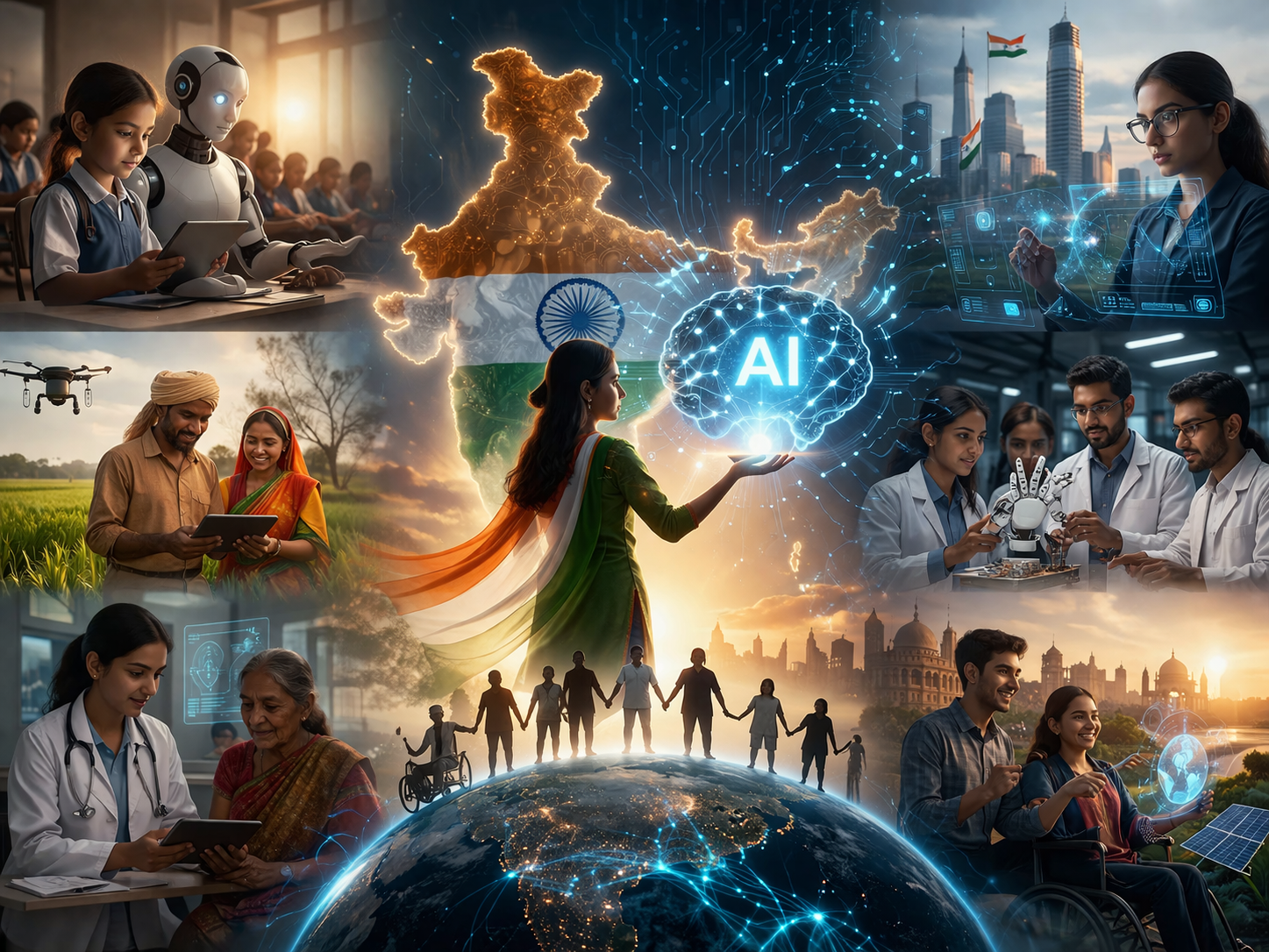
Viksit Bharat: Powering India's Future Through AI and Technology
Dr. Jagriti Basera Assistant Professor BVICAM, New Delhi India stands at a transformative crossroads where rapid technological advancement, especially in Artificial Intelligence (AI), is shaping its journey toward becoming a “Viksit Bharat” — a fully developed, inclusive, and globally competitive nation. The concept of Viksit Bharat goes beyond economic growth; it envisions a society that is technologically empowered, socially equitable, and environmentally sustainable. AI and emerging technologies are playing a central role in this evolution. From smart governance and digital public infrastructure to healthcare innovation and precision agriculture, India is leveraging technology to address long-standing challenges. Initiatives such as digital identity systems, fintech platforms, and e-governance services have already improved access, transparency, and efficiency at scale. In the economic sphere, AI is unlocking new opportunities for entrepreneurship, manufacturing, and services. Startups are harnessing data-driven solutions to solve local problems, while industries are adopting automation and analytics to boost productivity and global competitiveness. At the same time, investments in semiconductor manufacturing, robotics, and quantum computing signal India's ambition to lead in next-generation technologies. However, the path to Viksit Bharat also requires careful attention to inclusivity. Bridging the digital divide, upskilling the workforce, and ensuring ethical AI deployment are critical priorities. Technology must empower not just urban populations but also rural communities, small businesses, and marginalized groups. Education and skill development form the backbone of this transformation. By integrating AI literacy, critical thinking, and innovation into the education system, India can prepare its youth to thrive in a technology-driven world. Ultimately, the vision of Viksit Bharat is about harmonizing growth with equity. By strategically harnessing AI and technology, India has the potential to not only transform itself but also emerge as a global leader in responsible and inclusive innovation.
Read More
The Cost of Being Aspirational: Living on Borrowed Dreams
Kavyansh Khanna BA JMC 1st Year, BVICAM, New Delhi From houses and cars to phones and laptops, debt no longer builds stability. It builds appearances. This single line captures the reality of modern India. Once, borrowing meant creating something lasting. Today, it often means maintaining an image. In a society driven by social media and comparison, looking successful has become more important than being secure. A few decades ago, people took loans to build homes, educate children, or start businesses. These were investments in the future. They created roots. Earlier, debt created assets. Today, it creates the illusion of success. Now, loans are taken for smartphones, branded clothes, luxury bikes, and expensive gadgets. EMIs have become normal. “Buy Now, Pay Later” feels harmless. Credit cards feel like extra income. Slowly, borrowing has turned into a lifestyle instead of a necessity. We are not building wealth. We are building pressure. Young Indians care more about megapixels than money.Most of their salary goes into EMIs. We once took debt to build a future. Now we take it to upgrade a screen. In the Union Budget 2026–27, India plans to spend around `53.5 lakh crore, while earning much less through non debt revenue. This gap is filled through borrowing. The fiscal deficit is targeted at nearly 4.3 percent of GDP, and public debt stands at about 55.6 percent. But there is a key difference. The government mainly borrows to invest in infrastructure, transport, technology, and development. These are long term assets meant to support future generations. Individuals, however, often borrow only to consume. Being ambitious is not wrong. Wanting comfort is normal. Wanting growth is healthy. We all want a better life. But real success is not about showing lifestyle. It is about surviving life. A person with `50,000 saved and no EMI tension is richer than someone flexing `5 lakh gadgets on loan. When everyone starts borrowing just to live the lifestyle, the economy doesn't get stronger — it gets weaker. Indian households' debt has climbed to over 41 percent of GDP, and most of that borrowing is for everyday consumption, not real asset creation. That means more money going to EMIs and less going into savings or productive investment. With debt rising faster than savings and more loans taken just to consume, households have less financial cushion, making the economy fragile and growth more unstable. Instead of saving for emergencies or investing in businesses, people are stuck paying off credit cards and personal loans and that slows down long-term national progress too. Living on borrowed dreams may look attractive today. But it steals tomorrow. Earlier, debt created assets. Today, it creates the illusion of success. We once took debt to build a future. Now we take it to upgrade a screen. It is time to change that story. Because real success is not what you show. It is what you secure.
Read More